Table of Contents
Introduction
Why 2025 Is a Turning Point in Survival Gear
Key Technology Trends in Modern Survival Kits
3.1 Satellite Communication & SOS Devices
3.2 Energy Independence: Solar Power & Biomass
3.3 Smart Water Purification
3.4 Multi-Function Tools & AI Integration
3.5 Rugged Power Banks & Charging Solutions
Top 6 Must-Have High-Tech Survival Gear for 2025
How to Build a Balanced High-Tech Survival Kit
Budgeting for Modern Survival Gear
Maintaining and Testing Your High-Tech Kit
Conclusion & Call-to-Action
FAQs
Article
1. Introduction
Survival gear has come a long way. Gone are the days when a go-bag was just a flashlight, first-aid kit, and a few canned foods. In 2025, survival kits are evolving into high-tech systems — integrating renewable energy, satellite communication, and smart purification tools. Whether you’re prepping for natural disasters, long-term grid outages, or remote camping, a modern survival kit can offer more functionality, reliability, and self-reliance than ever before.
In this article, we’ll explore the latest trends driving high-tech survival, review the most important gear innovations, and walk you through how to build a survival kit that’s both modern and practical.
2. Why 2025 Is a Turning Point in Survival Gear
Several factors have converged to accelerate innovation in survival gear:
Increased disaster risk: Climate change, more frequent extreme weather, and infrastructure fragility push preppers to plan more seriously. ACCESS Newswire+1
Energy resiliency demand: Solar panels, foldable arrays, and hybrid charging systems are making off-grid power far more accessible. Portable Power Stations.
Communication gaps: Cell networks remain vulnerable in disaster scenarios, so satellite devices and off-grid comms are more attractive.
Sustainable gear: Preppers are increasingly favoring eco-friendly tools that don’t rely on disposable batteries.
These trends are driving a new class of survival gear — not just functional, but smart and sustainable.
3. Key Technology Trends in Modern Survival Kits
Here are the major innovations shaping high-tech survival kits in 2025:
3.1 Satellite Communication & SOS Devices
Global two-way messaging: Devices like satellite communicators (e.g., Garmin inReach) now let you send texts, GPS coordinates, and trigger emergency SOS from virtually anywhere. Wikipedia+1
Interactive SOS: When you press SOS, these devices can connect to a 24/7 rescue coordination center to dispatch help.
Navigation + tracking: Many of these communicators integrate GPS routing, allowing you to “TrackBack” to your starting point. Amazon
Offline mapping & weather: Some models let you download topo maps or satellite weather data to stay informed without cell service.
3.2 Energy Independence: Solar Power & Biomass
Solar power banks: Rugged, high-capacity power banks with solar panels and IP-rated durability are now standard in modern kits. Portable Power Banks.
Wood-burning stoves that generate electricity: Biomass stoves like modern thermo-electric systems convert heat from burning twigs into usable electricity — perfect for cooking + charging.
Hybrid charging systems: Devices that can be charged via solar, USB, or even AC give flexibility for both off-grid and plugged-in survival modes.
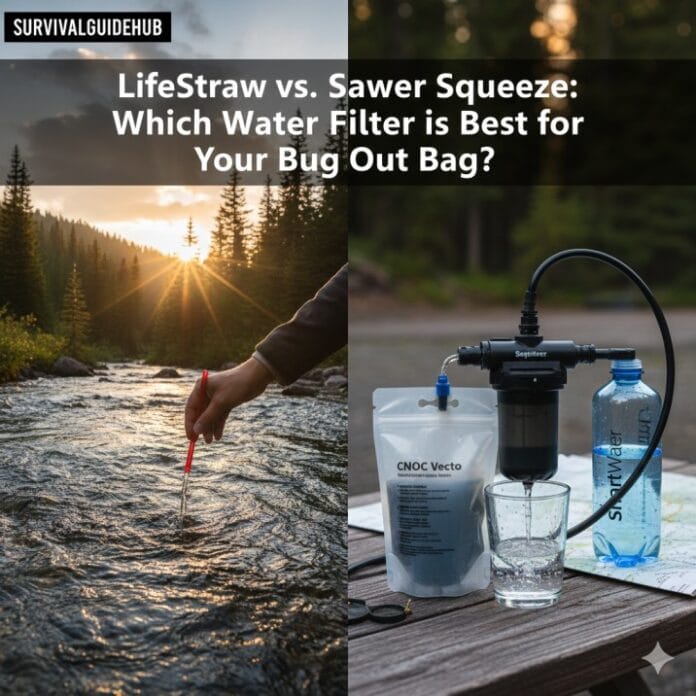
3.3 Smart Water Purification
Rapid purification bottles: New-generation filters (e.g., UltraPress) can purify 16.9 oz of water in seconds, eliminating viruses, bacteria, and heavy metals. Water Purifier Bottle.
Multi-stage filtration: These bottles combine mechanical filtration + activated carbon, giving a comprehensive purification profile.
3.4 Multi-Function Tools & AI Integration
Smart multi-tools: Flashlights with built-in alarms, seatbelt cutters, SOS modes, and more still play a central role. Amazon.
AI survival advisors: While still emerging, there’s research into AI-powered survival devices that can provide route planning, first-aid instructions, and more — even offline. arXiv
3.5 Rugged Power Banks & Charging Solutions
High-capacity solar power banks (20,000 mAh+), with IP67 or better water/dust protection and multiple output ports, are now key to modern bug-out or home kits. Amazon.
Pass-through charging: Some devices let you charge the power bank and your devices at the same time — ideal when using solar panels.
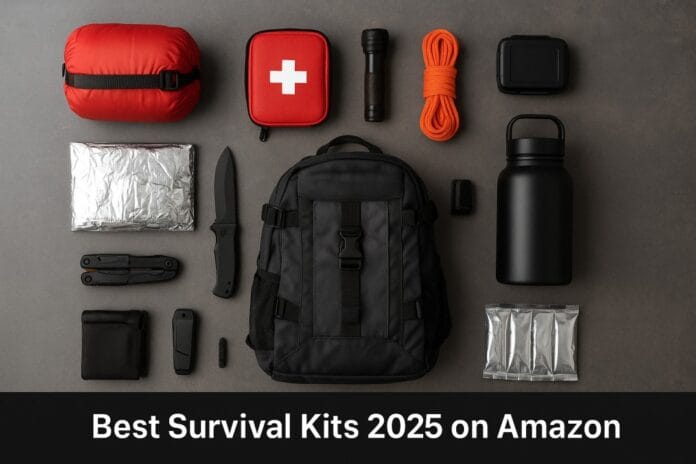
4. Top 6 Must-Have High-Tech Survival Gear for 2025
Here are six standout pieces of gear that embody the high-tech survival kit of 2025. All are available on Amazon (U.S.) and deliver real, practical value.
| Gear | Why It Matters |
|---|---|
| Garmin inReach Mini 2 | Satellite communicator with two-way texting, SOS, GPS, and long battery life. Amazon |
| GRAYL UltraPress Water Purifier Bottle | Purifies in 10 seconds, filtering out viruses, bacteria, and heavy metals. Amazon |
| BioLite CampStove 2+ | Burns wood to cook and generate electricity for your devices. Amazon |
| Solar Power Bank (Generic) | A high-capacity, rugged solar power bank ensures you can charge multiple devices off-grid. Amazon. |
| Crank or Solar Emergency Radio | Provides NOAA weather alerts, SOS beacon, flashlight, and can charge your phone. Amazon. |
| Multi-Function Survival Flashlight | Includes flashlight modes, window breaker, seatbelt cutter, alarm – a compact but powerful tool. Amazon. |
(Note: solar power bank and emergency radio are types/trends rather than single products — pick based on your kit goal.)

5. How to Build a Balanced High-Tech Survival Kit
When assembling a modern survival kit, here’s how to structure it for maximum resilience:
Assess your risk profile:
Do you live in a disaster-prone area?
Will you bug in (stay at home) or bug out (evacuate)?
How long do you need to sustain yourself (3 days? 2 weeks? more)?
Layer your communications:
Primary: Satellite communicator (e.g., Garmin inReach)
Secondary: Emergency crank/solar radio
Tertiary: Mobile phone with solar power bank
Power system:
Use a solar power bank as your core charging hub
Include a stove (like the CampStove) to generate power + cook
Water plan:
Carry smart purification: bottle + spare filters
Also include collapsible containers + chemical tablets as backup
Toolkit:
Multi-function flashlight / tool
Basic medical kit
Shelter items (tarp, rope, blankets)
Redundancy & testing:
Test devices quarterly
Rotate batteries / filters
Refresh food + water
6. Budgeting for Modern Survival Gear
High-tech gear often comes with a higher price, but there are smart ways to manage costs:
Prioritize by risk: Invest first in communication (satellite) and water purification — the most critical survival needs.
Buy modularly: You don’t have to buy all high-tech gear at once. Start with a base (power bank + radio) then add over time.
Watch for sales: Outdoor retailers and Amazon often run deals — especially on satellite messengers and solar gear.
Use hybrid tools: A stove that charges devices kills two birds with one stone — cooking and power.
7. Maintaining and Testing Your High-Tech Kit
Even the best gear is useless if you don’t maintain it:
Quarterly check: Turn on electronics, test SOS, filter water, charge and discharge batteries.
Filter maintenance: Replace filter cartridges according to manufacturer instructions.
Solar test: Expose your solar bank to sunlight and ensure it’s charging correctly.
Update firmware: If any of your devices (like GPS or communicators) support firmware updates, check them periodically.
8. Conclusion & Call-to-Action
High-tech survival kits in 2025 aren’t just a luxury — they’re a realistic and powerful way to boost your resilience. With satellite communicators, solar power systems, smart water purification, and multi-function tools, you can build a comprehensive kit that works both off-grid and during extended emergencies.
Take action today: pick one modern gear item (e.g., a satellite communicator or solar stove), add it to your emergency plan, and start testing. Building your high-tech kit doesn’t have to be done overnight — but the time to begin is now.